Parfum de mort: Action 50th Anniversary Special
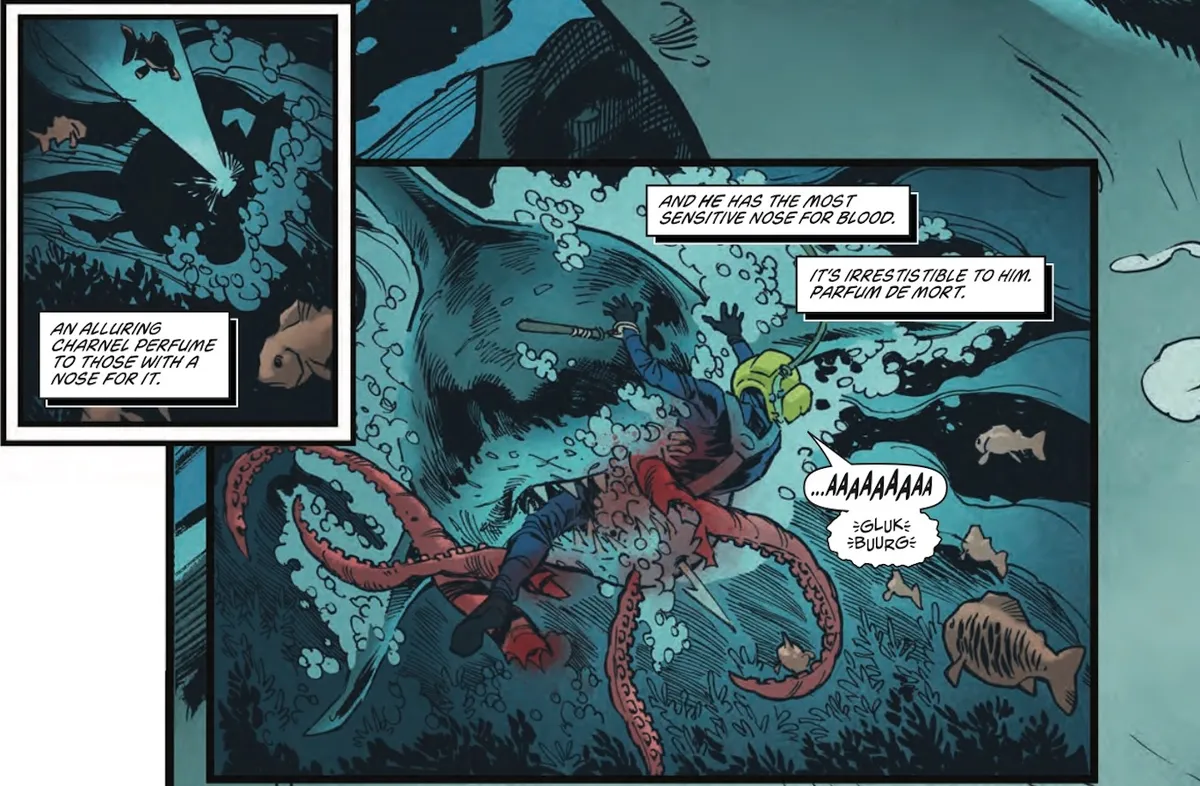
For The Comics Journal a read of Rebellion's Action 50th Anniversary Special, the calendar having spun through five decades since the IPC comic Action gave 1970s UK kids vast scads of graphic ultraviolence and the Daily Mail was furious and the publisher was shouted at on BBC One. Rebellion own all the old IP and has been planting little bits of Action in modern dress here and there ever since 2019; but at this point something with the old name and logo was called for, a direct appeal to nostalgia.
Nostalgia is a big part of Rebellion's business model, exemplified by not changing the title of 2000 AD at any point since 2000 CE. The creators of Action 50th themselves noted affably that the audience might be a niche of a niche, oldsters with fond memories. Rebellion would probably kill to have someone shout at them about this comic on BBC One today; but British comics have slipped off the radar and off the shelves and out of sight.
A lot of the original Action stories still look absolutely bonkers, insane, impossible. Steve Holland's recent book makes the case for tying Action into The Spirit Of Seventy-Six, and whether that's more or less watertight than the theory that soon afterwards 2000 AD was The Spirit of Seventy-Seven is something to think about. Both theories look pretty sweet in rose-coloured hindsight, although I was there and I'm not convinced. I myself was deep into Marvel mania by 1976 and almost oblivious to Action, other than vaguely thinking that that comic I wasn't reading was alarmingly drawn, and there may have been no overlap whatsoever between the Marvelites and the Action proto-radicals. The fanzines I read didn't cover Action any more than they covered Commando and Jinty, and I don't recall my classmates into the Avengers and Jack Kirby telling me that I should be reading Sport's Not for Losers instead. Which is to say that perhaps Action's storm was in an appropriate teacup.
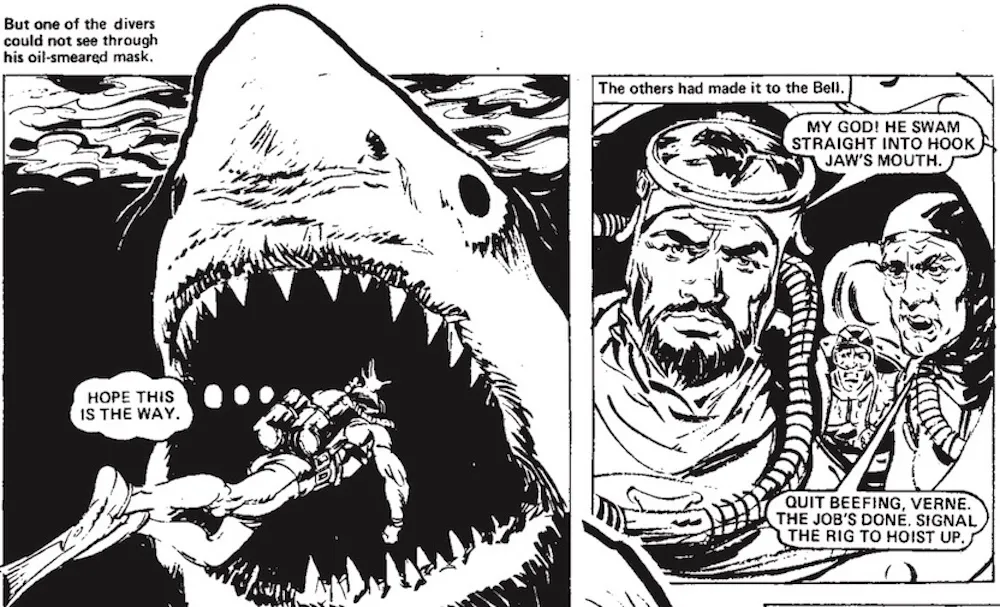
And yet the visuals in Action really were way out there and still are. The shark business triggers Jaws-related brainquakes, but even by those standards that panel by Ramon Sola of the diver swimming blithely into Hook Jaw's mouth is transgressively formidable. The guy in Dredger getting sulphuric acid pumped through his shower and dissolving; a man named Crazy Luigi hacking another man's hand off at the wrist with an axe; various 007 scenarios on the roofs of trains where people are decapitated by bridges and girders; various guys smashing straight through various windscreens and breaking their necks. The fact that these were not the things that caused most of the trouble, while the strips with football hooliganism and aggro on the terraces brought the house down, says something about which visuals were really feared in 1976: the ones showing urban breakdown on plausibly real council estates, social upheaval. Holland reckons that all this was for "ordinary young kids looking for the kind of realistic action that was not available in other comics," in which the word realistic is doing some work. Two decades earlier the EC comics of the 1950s had unrealistic horrors by the bucket, and there might be some historical parallels between the post-war ghosts being channelled over there and the post-colonial angst over here, plus the long absurdist tail of the UK 1960s satire boom. In Holland's book the good gentlemen of London's IPC Publishing look so British they could all be named Hugh Beeswax, and make EC's Graham Ingels seem as far out as Allen Ginsberg.
Today the best series in 2000 AD is a sci-fi political police procedural that, apart from an inherent distrust of elites, is about as far from the Action ethos as you can get while still being in the same medium, which might indicate something else about the passage of fifty years.